Advocacy

Arkansas Foodbank can’t fight hunger alone!

Only when charities, corporations, and the government work together can we end hunger. That’s why Arkansas Foodbank is building a community of advocates, policymakers, and partners to strengthen food assistance programs and invest in bold anti-hunger policies to help ensure no one in Arkansas goes hungry.

Everyone has something to bring to the table in the fight against hunger. What we do together today will influence who can get enough to eat tomorrow and for generations to come.
Urgent Advocacy Alert: Protect SNAP for Arkansans

The Arkansas Foodbank is deeply concerned about the proposed $200 billion in cuts to the Supplemental Nutrition Assistance Program (SNAP) included in the Senate’s recently passed “One Big Beautiful Bill.” These cuts would increase state costs, impose stricter work requirements, and limit benefit updates — threatening food access for hundreds of thousands of Arkansans.

Why This Matters:

“We don’t get a whole lot—just $60 a month—but it helps. It fills the gap,” said Julie, a retired cake decorator from Pulaski County. “For some people, SNAP is their only way to make sure their families have food.”

The Impact:

If enacted, these cuts will place even more pressure on food banks, pantries, and local hunger relief organizations. Arkansas Foodbank is committed to meeting this challenge through programs like:

  • Pop-Up Pantries in rural and underserved areas
  • Backpack and School Market Programs for children
  • Senior-focused initiatives to support the 1 in 8 older Arkansans facing food insecurity

How You Can Help

  • Donate: Every $1 helps provide 5 meals. Your support is more critical than ever.
  • Volunteer: Your time helps us sort, pack, and distribute food to those most affected.
  • Raise Your Voice: Share this message and advocate for policies that protect SNAP and support hunger relief.

Together, we can ensure no Arkansan has to wonder where their next meal will come from.

The Farm Bill

What is the Farm Bill?
  • The Farm Bill is a major piece of legislation passed approximately every five years that governs a wide range of programs related to food, nutrition, agriculture, conservation, and rural development.
  • It was first enacted during the 1930s as part of President Franklin D. Roosevelt’s New Deal, in response to the Dust Bowl and the Great Depression.
  • The 2018 Farm Bill (Agriculture Improvement Act) expired in 2023. The 2025 Farm Bill, passed as part of the “Big Beautiful Bill” (HRII), includes significant updates to nutrition programs, conservation funding, and rural infrastructure.
Recap of the 2018 Farm Bill
  • The Congressional Budget Office estimated the five-year spending at $428 billion
  • Three-fourths of spending in the 2018 Farm Bill is for nutrition assistance programs
  • The legislation approves hemp cultivation in the US with several limitations, including a maximum hemp THC level of 0.3%
Recap of the 2025 Farm Bill
  • The Congressional Budget Office (CBO) estimates five-year spending at $587 billion, reflecting inflation and expanded program coverage.
  • Roughly 72% of total spending is allocated to nutrition assistance programs, including SNAP, TEFAP, and child nutrition initiatives.
  • The 2025 Farm Bill reaffirms the legalization of hemp cultivation in the U.S., maintaining the maximum THC threshold at 0.3%. It also introduces stricter testing and licensing requirements to ensure compliance and product safety.

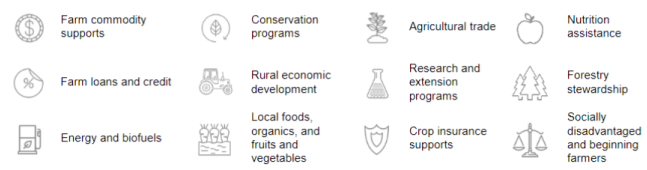
Key Policy Areas Covered in the Farm Bill

The Emergency Food Assistance Program (TEFAP)

TEFAP: A Lifeline for Arkansas Families

The Emergency Food Assistance Program (TEFAP) remains a cornerstone of hunger relief in Arkansas. The 2025 Farm Bill increased TEFAP funding to $500 million annually, helping food banks meet rising demand.
Why TEFAP Matters:
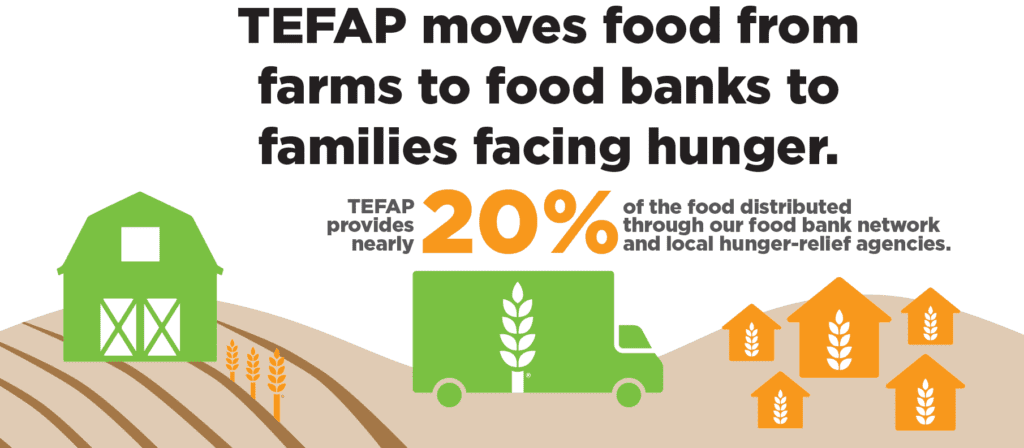
  • TEFAP provides nearly 20% of the food distributed through the Arkansas Foodbank and its 400+ partner agencies.
  • It offers over 120 nutritious food items, including:
    • Fresh and canned fruits and vegetables
    • Eggs, dairy, meat, poultry, and fish
    • Whole grains, rice, cereal, and pasta
  • TEFAP food is purchased by the USDA and distributed to local communities through food banks.
The Need in Arkansas:
  • 1 in 5 Arkansans struggles with hunger.
  • 1 in 4 children is food insecure.
  • Since 2023, food demand has risen by over 55%, while USDA food supply is projected to drop by 30–40% without sustained funding


What You Can Do to Help


  1. Contact your legislators and urge them to continue supporting TEFAP and hunger relief programs.
  2. Tell your story: Share how TEFAP food has helped your family or community.
  3. Use our updated TEFAP Impact Overview to provide facts and figures that show the program’s importance.
  4. Find Your Representative